
Easy Persian Recipes for Beginners – Authentic Persian Recipes Guide0
A Warm Start: Why You’ll Fall in Love With Persian Recipes
You know that moment when a smell instantly makes you feel at home? Persian recipes have that effect. When saffron touches warm rice or fresh herbs hit hot oil, the aroma alone can change your mood. You don’t need to be a professional chef or own special equipment. You just need curiosity, patience, and a willingness to try something new.
If you’ve ever wanted to cook international food but felt intimidated,
Persian cooking are actually a perfect place to start. Many traditional Iranian dishes rely on simple ingredients, slow cooking, and balanced flavors. Once you understand the basics, you’ll notice how approachable these recipes really are.
This guide is designed to help you confidently prepare easy Persian recipes for beginners using techniques you can repeat every week.

What Makes Persian Recipes So Special?
Persian recipes stand out because they focus on balance. Instead of overwhelming spice or heavy sauces, you’ll find harmony between flavors.
Key Characteristics of Persian Recipes
- Fresh herbs are used in large quantities
- Sweet and sour flavors often appear together
- Saffron adds aroma and color
- Slow cooking builds deep flavor
When you cook Persian recipes, you’re not just following steps — you’re creating layers of taste.
Essential Ingredients You Should Have Before Cooking Persian Recipes
Before you try easy Persian recipes, you should build a small Persian pantry. The good news? Most ingredients are available in international stores or online.
Core Persian Cooking Ingredients
- Saffron
- Turmeric
- Basmati rice
- Yogurt
- Fresh herbs (parsley, cilantro, mint)
- Pomegranate molasses
- Dried lime (optional for beginners)
Essential Persian Recipe Ingredients Table
| Ingredient | Common Use | Flavor | Beginner Friendly |
|---|---|---|---|
| Saffron | Rice, desserts | Floral, warm | Yes |
| Turmeric | Stews | Earthy | Yes |
| Yogurt | Sauces, dips | Fresh, creamy | Yes |
| Pomegranate Molasses | Sauces | Sweet & sour | Medium |
5 Easy Persian Recipes for Beginners You Should Try First
If you’re new to Persian recipes, start with dishes that are simple but authentic.
1️⃣ Persian Saffron Rice (Chelow)
This is the foundation of many Persian recipes.
Ingredients
| Ingredient | Quantity |
|---|---|
| Basmati Rice | 2 cups |
| Saffron | Small pinch |
| Butter or Oil | 1 tbsp |
| Salt | To taste |
Why You Should Start Here
- Simple technique
- Teaches rice washing and soaking
- Builds confidence quickly
2️⃣ Beginner Ghormeh Sabzi (Herb Stew)
This is one of the most loved
Persian cooking.
Why it’s beginner-friendly:
- You can use frozen herbs
- One pot cooking
- Great meal prep option
3️⃣ Easy Chicken Fesenjan
A rich walnut and pomegranate stew adapted for beginners.
Why you’ll like it:
- Unique sweet-sour taste
- Simple sauce cooking
- Feels like restaurant-level food
4️⃣ Mast-o-Khiar (Persian Yogurt Dip)
Perfect if you want zero stress cooking.
Why it’s great:
- Ready in 10 minutes
- No cooking needed
- Works with many meals
5️⃣ Persian Tomato Omelette
Simple, fast, and perfect for breakfast or light dinner.
Why beginners love it:
- Cheap ingredients
- Fast cooking
- Very forgiving recipe
Mistakes You Should Avoid When Cooking Persian Recipes
When you start cooking Iranian dishes, you might make small mistakes. That’s normal. But avoiding these will help you improve faster.
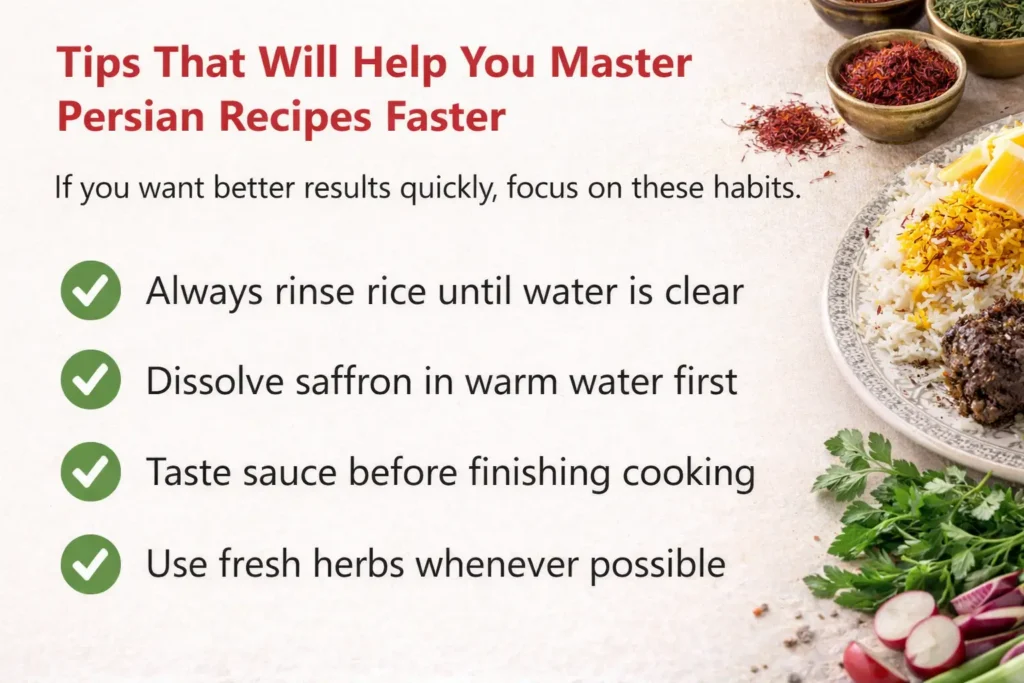
Common Beginner Mistakes
- Using too much saffron
- Skipping rice soaking
- Not tasting during cooking
- Cooking herbs too quickly
Remember: Persian cooking rewards patience.
Why Many Persian Recipes Are Surprisingly Healthy
Many people don’t realize that Persian recipes can be very balanced nutritionally.
Health Advantages
- Herbs provide antioxidants
- Yogurt supports digestion
- Lean meats are commonly used
- Meals combine carbs, protein, and fiber
If you’re trying to eat better without losing flavor, Persian recipes are a strong option.
FAQ About Persian Recipes
Are Persian recipes difficult for beginners?
No. Many Persian recipes use basic cooking skills like boiling rice, simmering stews, and mixing yogurt sauces.
What is the easiest Persian recipe to cook first?
Persian saffron rice and yogurt dips are usually the easiest Persian recipes to master first.
Do all Persian recipes use saffron?
No. While saffron is important in Persian cuisine, many Persian recipes don’t require it.
Are Persian recipes spicy?
Not usually. Persian recipes focus more on aroma and balance than heat.
Conclusion: You’re Closer Than You Think to Cooking Persian Recipes
You don’t need special training to start cooking Persian recipes. You just need one recipe, one cooking session, and the willingness to learn. Once you cook your first Persian rice dish or simple stew, you’ll realize how accessible this cuisine really is.
Persian recipes are about comfort, family, and sharing food that feels meaningful. And now, you have the basics to start.