Why Mexican Potluck Food Is Always a Success
Potluck parties are about sharing food, discovering new flavors, and enjoying meals together. Mexican cuisine is perfect for potluck events because it is rich in flavor, colorful, and designed for sharing. From creamy dips to cheesy casseroles and handheld tacos, Mexican party recipes are usually easy to prepare, transport, and serve to a group.
If you are looking for the best Mexican Potluck Ideas, this guide will help you choose crowd-pleasing dishes that are simple to prepare and perfect for sharing.
Top 15 Mexican Potluck Food Ideas
Dips and Starters
- Guacamole
- Elote (Mexican Street Corn Dip)
- Queso Cheese Dip
- Pico de Gallo
- Seven Layer Mexican Dip
Main Dishes for Sharing
- Chicken Enchiladas
- Beef or Chicken Tacos
- Mexican Rice
- Tamales
- Chicken Fajita Tray Bake
Casseroles and Baked Dishes
- Mexican Chicken Casserole
- Taco Pasta Bake
- King Ranch Chicken
Mexican Desserts
- Churros
- Tres Leches Cake
Best Make-Ahead Mexican Dishes
If you need easy Mexican party food you can prepare in advance, choose:
- Enchiladas (better flavor next day)
- Mexican Rice (reheats well)
- Tamales (freeze and steam later)
- Taco Casserole (easy transport)
- Tres Leches Cake (needs chilling anyway)
Crowd Favorite Mexican Dips and Casseroles
Most Popular Party Dips
- Guacamole
- Queso Dip
- Corn Elote Dip
- Taco Layer Dip
Most Popular Casseroles
- Chicken Enchilada Bake
- Mexican Taco Pasta
- Cheesy Chicken Rice Bake
These dishes are ideal because they are filling, affordable, and easy to serve buffet-style.
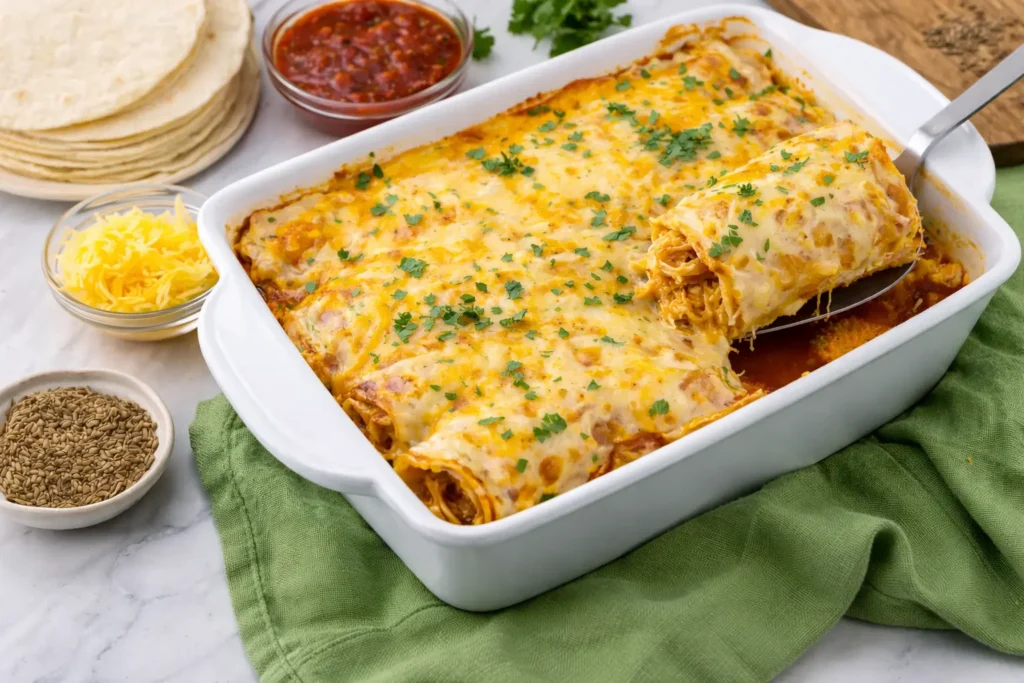
Step-by-Step Recipe: Creamy Mexican Chicken Enchilada Bake
Ingredients (6–8 Servings)
- 3 cups cooked shredded chicken
- 8 tortillas
- 2 cups enchilada sauce
- 1 cup sour cream
- 2 cups shredded cheese
- 1 chopped onion
- 1 teaspoon cumin
- Salt and pepper
Instructions
Step 1: Preheat oven to 180°C
Step 2: Mix chicken, onion, sour cream, cumin, salt and pepper
Step 3: Layer tortillas → chicken mixture → sauce → cheese
Step 4: Repeat layers
Step 5: Bake 25–30 minutes until cheese is golden
Step 6: Let rest 10 minutes before serving
Nutrition Estimate (Per Serving)
- Calories: ~420 kcal
- Protein: ~28 g
- Carbohydrates: ~32 g
- Fat: ~20 g
Chef Tips
- Add jalapeños for extra spice
- Serve with avocado slices
- Mix two cheeses for better flavor
- Use rotisserie chicken to save time
- Freeze before baking for meal prep

FAQ
What Mexican food is best for potluck?
Dips, casseroles, enchiladas and tacos work best.
What is the easiest Mexican dish for beginners?
Guacamole, Mexican rice or taco casserole.
Can Mexican potluck food be made ahead?
Yes. Many dishes taste better the next day.
Discover the best Mexican potluck ideas including easy Mexican party food, sharing dishes, dips, casseroles, and a step-by-step Mexican chicken recipe perfect for parties.
Mexican potluck ideas are popular because Mexican food is full of flavor, colorful, and easy to share with others. Many Mexican dishes can be prepared ahead of time, making them perfect for potluck events, family gatherings, and parties. From Mexican dips like guacamole and salsa to baked dishes like enchiladas and casseroles, Mexican party food offers something for everyone. Choosing easy Mexican party food helps save time while still serving delicious dishes that guests will enjoy. Mexican dishes for sharing are ideal for large groups because they are simple to serve and often budget friendly.